Mahjong Tile Nine Circles: Craft Fair Design Review
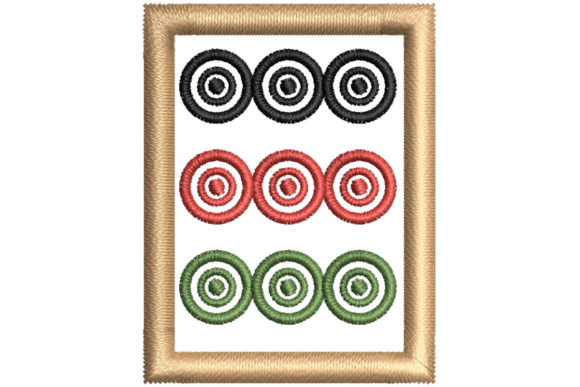
When I first opened the Mahjong Tile Nine Circles embroidery file, I immediately felt that familiar spark, the one that tells me a design has real potential for a packed weekend craft fair booth. This is not a piece that tries to do too much. It leans into a clean, recognizable motif that feels equal parts modern, minimal, and slightly nostalgic. The nine circles arranged in a classic grid, framed by a simple border with no background fill, give it a crisp, almost stamped appearance on fabric. For a handmade product seller, that kind of clarity is gold. It reads well from a distance, photographs beautifully for Etsy listings, and gives off a polished, boutique vibe without screaming for attention.
From a production standpoint, the fact that the background is not filled except for the border is a major advantage. It means the machine embroidery design will breathe on the fabric. You avoid that heavy, bulletproof stiffness that can turn a soft tea towel into something that feels like cardboard. The open center allows the natural fabric texture to show through, which is exactly what I look for when I am planning products that people will actually want to touch, hold, and buy on impulse. The design feels intentional and restrained, two qualities that tend to sell well in a handmade market setting where customers are drawn to items that feel artisanal rather than mass-produced.
First Impressions and Booth Display Potential
The mood of Mahjong Tile Nine Circles is what I would call structured but approachable. It has a geometric, almost architectural quality that appeals to customers who love clean lines, game night culture, and subtle nods to tradition. At a craft fair, I can picture this design catching the eye of a very specific buyer, someone who either plays mahjong or appreciates the aesthetic of classic tile games. That built-in niche is a selling advantage. You are not just selling a pretty embroidered item. You are selling recognition, nostalgia, and personality. That is the kind of emotional hook that turns a browser into a buyer.
On a booth table, items featuring this design would stand out best when grouped with other game-inspired or minimalist motifs. I would personally place it on a neutral linen tote bag right at the front of the display. The contrast between the unbleached fabric and a deep thread color, perhaps a rich navy, charcoal, or even a vibrant red, would make the nine circles pop. The design does not need to be oversized to be effective. A four-inch version on a pouch or a three-inch version on a cap front can still carry the visual weight needed to draw someone in. Because the composition is so simple, it scales down reasonably well, though I would always test stitch density at smaller sizes before committing to a full production run.
Best Products for Mahjong Tile Nine Circles
After running through my mental checklist of what sells at weekend markets, I see several strong product matches for this particular embroidery file. Tote bags are an obvious winner. The rectangular shape of the tile motif naturally complements the canvas of a tote, and the open background means the bag remains lightweight and flexible. Canvas and cotton-linen blends are ideal fabric choices here. I would avoid heavily textured or nubby surfaces that might distort the clean border lines.
Tea towel embroidery is another excellent application. A single tile design centered on a flour sack towel creates a giftable, functional item that feels elevated. Kitchen textiles with game motifs have a quirky, conversation-starting quality that shoppers love. I would also strongly consider apron embroidery, placing the design on a bib apron pocket or near the hem. It gives off a welcoming, slightly playful energy without being juvenile.
For smaller items, embroidered patch production is a natural fit. The description even mentions sewing the design onto a garment or making it into a patch, and that direction makes perfect sense. The border is already defined, and the lack of background fill means you can trim closely around the edges for a clean patch shape. Patches are low-risk, high-margin products at craft fairs. They take up almost no table space, and customers love to browse through a basket of them. I would produce a batch of these in multiple thread colors on a neutral twill or felt backing and see which combination moves fastest.
Small Goods and Giftable Items
Fabric pouches, zipper bags, and small canvas storage bins are also strong candidates. The design is compact enough to fit on a narrow pouch front without feeling cramped. For pillow covers, I would either use a single centered tile or create a repeat pattern with multiple tiles, depending on the pillow size. A lumbar pillow with one bold tile in a contrasting thread color feels modern and almost gallery-worthy. Market bags, the lightweight foldable kind, benefit from a small accent design, and Mahjong Tile Nine Circles works perfectly as a subtle corner detail or a centered badge-style motif.
For Etsy sellers and digital product creators, this design also has strong potential as a printable mockup asset. The clean lines and simple geometry make it easy to showcase in listing photos. A well-lit flat lay with a stitched sample on a linen background immediately communicates quality and taste. It photographs with crisp edges, and the lack of dense fill reduces the risk of shiny thread reflections that can ruin product images. That is a small but meaningful detail when you are trying to build a cohesive brand look across dozens of listings.
Practical Production Notes for Craft Fair Sellers
Before I stitch a single item for inventory, I always run a test on scrap fabric. For Mahjong Tile Nine Circles, this step is non-negotiable. The border is the defining element of the design, and if the tension is off or the fabric shifts during stitching, that border will show every flaw. I recommend a medium-weight cutaway stabilizer for most applications, especially on woven fabrics like cotton canvas or linen. On stretchier materials, a fusible mesh stabilizer can prevent distortion without adding too much stiffness. Hoop the fabric taut but not overstretched, and double-check the alignment before starting.
Thread color selection deserves careful thought. The design is simple, so the color carries a lot of the personality. A dark navy or black thread on a natural fabric reads as classic and sophisticated. A bright red or gold thread pushes the design toward a more festive, game-night energy. I would avoid pale or pastel threads on light fabric because the contrast is too low and the design loses its impact at a distance. The goal is for someone walking past the booth to immediately recognize the tile motif, and that requires strong visual contrast.
Stitch Density and Design Clarity
Because the background is not filled, the stitch density is concentrated in the border and the nine circles themselves. This is generally a good thing for production speed and material cost. However, I always inspect the circle satin stitches closely. On some digital embroidery file versions, small circular elements can become dense and stiff if the stitch count is too high. I would test one circle under a magnifying glass or loupe. If the stitches look raised or puckered, I might adjust the density slightly in my embroidery software before stitching the full design. This is especially important if I am stitching on thinner fabrics like a lightweight tea towel or a delicate cotton pouch.
For curved cap surfaces, I would approach this design with some caution. Caps have a pronounced dome, and a flat rectangular design can warp if not digitized with a slight curve. I would test the placement on a cap front and evaluate whether the border remains parallel to the brim. If the file was not specifically digitized for caps, I might reserve this design for flat surfaces only and avoid the cap application altogether, or I would manually adjust the placement and use a cap-specific hoop and backing.
Customer Attention and Perceived Value
One of the things I love about this design from a selling perspective is how quickly it communicates. A customer does not need to stand there and study it. They either recognize the mahjong tile reference or they are drawn to the geometric symmetry. Either way, the decision to pick up the item happens fast. That is essential at a busy craft fair where attention spans are short. Items that sell themselves in under five seconds are the ones that keep your cash box full.
The perceived value of a finished product with Mahjong Tile Nine Circles is also higher than the production cost would suggest. The design looks intentional, custom, and niche. It does not look like a generic stock embroidery pattern. That allows a small shop product seller to price it confidently as a premium handmade item. When a customer sees a well-executed tile design on a quality tote bag or apron, they understand that this is not something they can grab at a big-box store. That exclusivity is what builds loyalty and repeat business.
Brand Consistency and Repeatable Production
For a small embroidery business, consistency is everything. Mahjong Tile Nine Circles is a design that I can stitch repeatedly without worrying about color changes, complex trims, or excessive thread breaks. It is a single-color design, which means I can set up a machine and let it run while I work on other tasks. Batch production becomes efficient. I can stitch a dozen patches in an afternoon without constant supervision. That reliability is key when you are building inventory for a market and every hour counts.
Brand-wise, this design fits into a cohesive collection. I could pair it with other mahjong tile designs, other game motifs, or even geometric patterns that share a similar visual language. A booth that feels curated rather than random always performs better. Customers notice when every product feels like it belongs to a family. This tile design anchors a collection beautifully because it is simple enough to play well with others but distinctive enough to stand on its own.
Careful-Use Notes and Potential Pitfalls
No design is perfect for every application, and Mahjong Tile Nine Circles has a few limitations worth noting. On dark fabric, the design can lose its crispness if the thread color does not provide enough contrast. I would test a white or metallic thread on black canvas before committing to a full run. On textured towels, the border stitches can sink into the pile and look uneven. A topper or a layer of water-soluble stabilizer on top of the towel can help, but it adds a step to production. I would reserve towel applications for low-pile or flat-woven styles rather than thick terry cloth.
At very small sizes, below two inches, the circles may start to lose definition. The satin stitches can blend together, and the border may look disproportionately thick. I would keep the design at two and a half inches or larger for most products. For patches, a three-inch version hits the sweet spot of visibility and wearability. Anything smaller and I would test, test, test before offering it for sale.
Final Designer Notes Before Production
Every time I introduce a new machine embroidery design into my product lineup, I follow a mental checklist, and I would do the same here. First, I confirm the hoop size required by the file. If the design is larger than my most-used hoops, I need to plan accordingly. Second, I check the stitch density and make any adjustments for the specific fabric I am using. Third, I create at least one real finished product mockup, not just a digital preview, and I photograph it in natural light to see how it will look in my Etsy shop. Fourth, I compare fabric color swatches with my thread choices to find the combinations that look most expensive and intentional. Fifth, I confirm that I have the appropriate commercial embroidery licensing to sell finished items made with this digital embroidery file. Licensing terms vary, and I never assume anything. I always verify before stocking my booth.
For a craft fair seller, an embroidery file like Mahjong Tile Nine Circles represents a smart, low-risk addition to a product catalog. It stitches cleanly, photographs well, appeals to a niche audience, and adapts to multiple product types. Whether I am stitching it onto a tote bag design, producing a batch of patches, or creating a coordinated set of kitchen textiles, the design consistently delivers a polished, handmade look. It is the kind of asset that quietly boosts the overall quality of a booth display and gives customers one more reason to stop, smile, and reach for their wallet. I would stock it confidently and keep a close eye on repeat sales, because designs like this tend to develop a loyal following over time.